
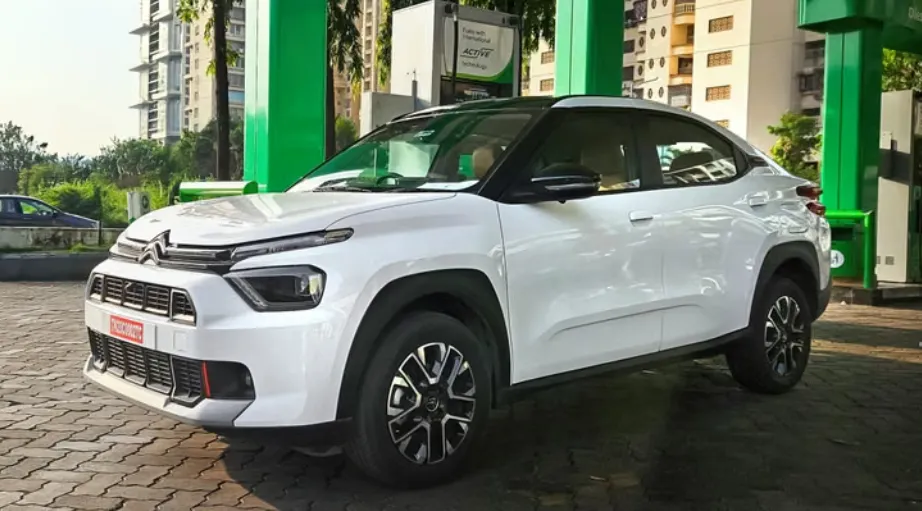
Ever wondered how far the Citroën Basalt X really runs on a litre of petrol in everyday life?
The newly launched Citroën Basalt X has captured a lot of attention, and now we have the real-world numbers for its fuel economy. This means how it actually performs on roads, not just the best-case lab figures. Let’s look at what tests show, what you should know, and what actions you can take as a potential buyer.
What the Tests Show
According to a recent feature from a trusted automotive source, the Basalt X was tested in everyday driving conditions, and the results are clear: city mileage was recorded at about 11.77 km per litre for one variant, and 9.87 km per litre for another under tougher conditions. On the highway, one variant managed about 15.83 km per litre.
These are significantly lower than the claimed manufacturer figures of around 18 to 19.5 km per litre in standard conditions.
Why the Big Difference?
There are several reasons why the Basalt X’s real-world fuel economy is lower than the claimed numbers:
- Driving conditions: City traffic, stop-and-go driving, and frequent idling reduce fuel efficiency more than steady highway driving.
- Variant differences: Models with automatic transmission or the turbo-petrol engine tend to consume more fuel than the base manual version.
- Real-life load and use: Carrying passengers, using air-conditioning, climbing slopes, and other everyday factors impact mileage.
- Lab test vs actual roads: Manufacturer or regulatory tests assume optimal conditions, which rarely match real-world driving.
What It Means for You
If you are considering buying the Basalt X, here’s what this means:
- Expect fuel economy in the city closer to 10–12 km per litre, rather than the claimed 18+.
- On highways or steady roads, you may see up to 15–16 km per litre, which is better but still below the ideal number.
- Your actual cost for fuel will be higher than what the ARAI/Maker numbers suggest—so budget accordingly.
- If you do a lot of city driving, you might want to compare with other models that show better real-world efficiency.
You May Also Like to Read this Article - Is the Citroen Basalt X petrol-AT worth buying after its recent update?
Practical Tips to Improve Efficiency
Here are some things you can do to get better mileage from your Basalt X:
- Drive smoothly: Avoid harsh acceleration or braking whenever possible.
- Keep your tyre pressure at the recommended level — under-inflated tyres hurt fuel economy.
- Use A/C and electrical accessories wisely — heavy use raises fuel consumption.
- Service the car regularly: clean filters, correct engine tuning, well-maintained components help efficiency.
- When possible, use the manual variant (if that suits your driving) because automatics often consume slightly more.
Why These Tests Matter
Fuel economy isn’t just about numbers — it’s about long-term cost, daily convenience, and peace of mind. When a car consumes more fuel than expected, it means you spend more money, stop for fuel more often, and it impacts your ownership experience. For general car buyers, the real-world performance matters more than the lab figures. The Basalt X test results show that what you will likely experience is lower than the claimed number, but with awareness and smart driving ,you can optimise it.
Final Thoughts
The Basalt X looks smart, offers a good set of features, and the claimed numbers promise strong fuel efficiency. But the real-world test shows a gap. If you are buying the Basalt X, go in with the expectation of around 10–12 km per litre in city driving and up to ~15 km per litre on highways. Use the tips above to maximise what you get, and possibly compare with other models if fuel economy is a top priority for you.