
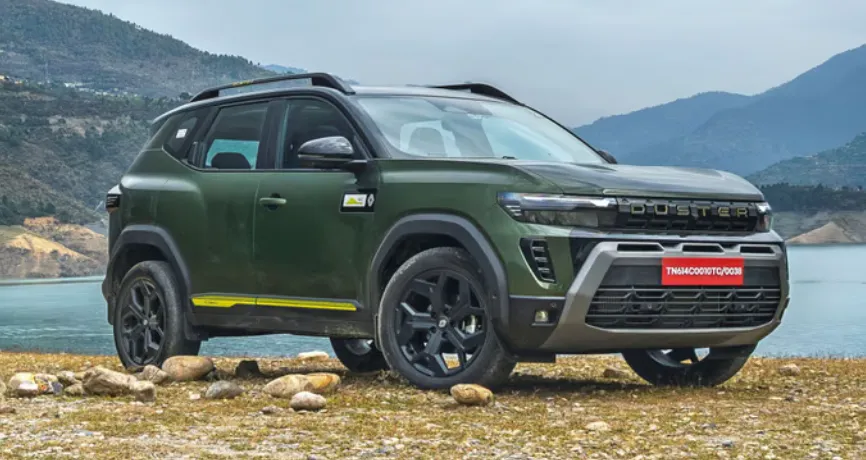
Want to know which new SUV can take you far without drinking too much fuel? The 2026 Renault Duster Fuel Efficiency numbers are finally out – and they are very good news for your pocket!
What Does the 2026 Renault Duster Fuel Efficiency Mean?
The 2026 Renault Duster Fuel Efficiency tells you how many kilometers this car can run on 1 litre of petrol. Higher numbers mean less fuel usage and lower daily running cost.
For example, if a car gives 18 km/l, it can travel about 18 km on 1 litre of petrol. That is better than a car that gives only 12 km/l.
Official Fuel Efficiency Numbers
For the 2026 Renault Duster, the official tests show very healthy mileage figures, especially for a strong‑looking SUV.
- The petrol manual version of the 2026 Renault Duster can give around 17.75 km per litre.
- The petrol automatic (DCT) version improves slightly to about 18.45 km per litre.
This means if your fuel tank is 50 litres, you could travel roughly 850–920 km on a full tank in normal conditions.
Why Should You Care About Fuel Efficiency?
Good 2026 Renault Duster fuel efficiency is important for three simple reasons:
- Less fuel cost every month – if you drive 1,000 km every month and your car gives 12 km/l, you will need about 83 litres of petrol. But if your car gives 18 km/l, you need only about 55–56 litres, saving you a lot of money.
- Fewer trips to the petrol pump – you can travel longer distances without worrying about refuel.
- Less pollution – less fuel used means fewer harmful gases from the car’s exhaust.
Are These Numbers Real‑World?
Official numbers are tested in special labs, but real‑world values are usually a bit lower.
Many tests on the 2026 Renault Duster show real‑world mileage between 14–16 km/l in mixed city and highway driving.
- In city traffic, you might see around 14–15 km/l.
- On highways and open roads, some drivers report up to 16–17 km/l.
So even if it is slightly less than the official numbers, the 2026 Renault Duster fuel efficiency is still very good compared to many other SUVs in its price range.
You May Also Like to Read this Article - All You Need to Know About Renault Duster Before India Launch
How Can You Get Better Fuel Efficiency?
You are not just buying a car, you are also choosing how smartly you will drive it. Here are five easy things you can do to get better mileage from the 2026 Renault Duster:
- Drive at a steady speed – avoid sudden speeding up and hard braking. Smooth driving saves fuel.
- Use the right gear – in manual mode, change gears on time and do not keep the engine RPM too high.
- Keep tyres correct – properly inflated tyres make the car move easily and reduce fuel use.
- Avoid heavy load – only carry what you need; extra weight forces the engine to work harder.
- Service on time – regular engine checks, oil changes, and air‑filter cleaning help the car stay efficient.
If you follow these tips, your 2026 Renault Duster can stay close to its best possible fuel efficiency.
Saving Money Every Month: A Simple Example
Imagine you drive 1,000 km every month.
- If your SUV gives 12 km/l, you will use about 83 litres of petrol.
- If the 2026 Renault Duster gives around 17–18 km/l, you will use only about 55–60 litres.
That can save you hundreds of rupees per month over time, which you can use for your family, savings, or fun trips.
Why This Matters for You
If you are looking for a family SUV that is strong, comfortable, and not too expensive to run every day, the fuel efficiency of the 2026 Renault Duster makes it a smart choice.
Before you buy, remember:
- Compare official and real‑world mileage data.
- Think about your daily driving (city vs highway).
- Ask a test‑drive and check how your driving style affects the fuel numbers.
By paying attention to 2026 Renault Duster fuel efficiency, you are not just buying a car – you are choosing a friend that will help you save money and travel far for many years.






,-x-line(o)-variants-launched-at-rs-21.57-lakh.webp)