
India’s sugar mills are shouting loud — “Use more ethanol in fuels!” But why? Because too much ethanol is waiting in tanks and not enough cars are using it!
Across the country, many sugar factories are facing a strange problem. They made lots of ethanol — a special liquid fuel made from sugar — but now they don’t know what to do with it. This situation is called ethanol overcapacity, which means there’s too much ethanol and not enough people or industries using it.
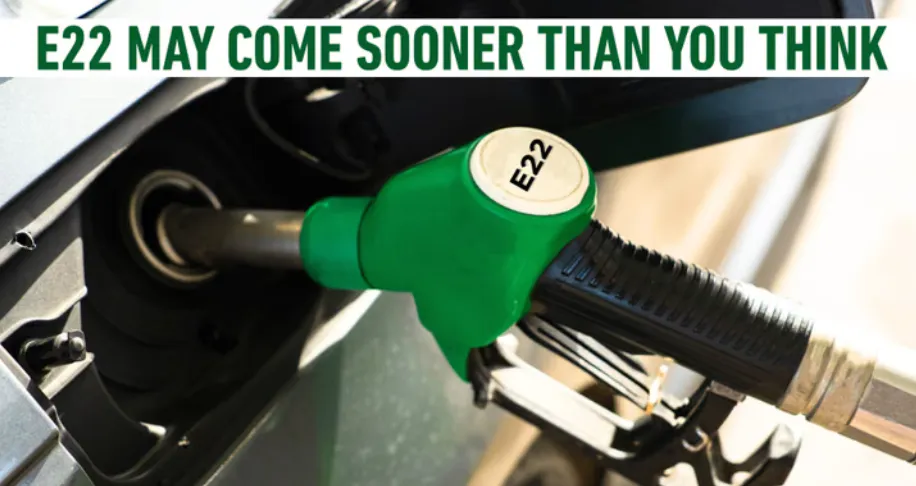
To fix this, the Sugar Lobby, a powerful group that represents India’s sugar industry, is asking the government to start something new — the E22 Transition. That means making fuel that has 22% ethanol mixed with petrol. Right now, most cars use E10, which has only 10% ethanol. E22 will double that amount, helping sugar mills sell their extra ethanol and making India’s fuel more eco-friendly!
What Is Ethanol and E22?
You might be wondering — what exactly is ethanol? Ethanol is an alcohol made from sugarcane juice and molasses. It burns cleanly, which means less smoke and pollution when cars run on it. When we mix ethanol with petrol, the fuel becomes greener and cheaper too!
The E22 fuel idea is simple: instead of burning only petrol, we use a mix — 78% petrol and 22% ethanol. This helps reduce pollution, saves money, and supports farmers who grow sugarcane. So, the E22 Transition as ethanol overcapacity bites is not just about sugar; it’s about cleaner air and stronger farming communities.
Why the Sugar Lobby Is Pushing Hard
Sugar mills depend on sugarcane growers. When sugar stockpiles get too high, ethanol production becomes a good way to use the leftover syrup from sugar. In recent years, India encouraged companies to make ethanol to reduce import costs for petrol. But now, because of delays and limited blending capacity, huge amounts of ethanol are lying unused.
The Sugar Lobby says — if we move quickly to the E22 Transition, all that extra ethanol can be used, farmers will earn more, and India will move closer to its clean-energy goals. They also remind that other countries like Brazil have been using high-ethanol fuels for years successfully.
How the E22 Transition Helps You
The move toward E22 fuel isn’t just big news for sugarcane farmers or factories — it helps you too!
- Cleaner air: Cars running on E22 fuel release fewer harmful gases.
- Cheaper fuel: Ethanol-blended fuel may help lower prices at the pump.
- Farmer support: More ethanol means more business for local farmers.
- Energy independence: India will rely less on imported petrol.
- Climate protection: Every drop of ethanol used helps cut carbon pollution.
If you care about cleaner cities, better farmer income, and new technology, the E22 Transition is a change worth supporting.
You May Also Like to Read this Article - Delhi EV Policy 2026: Up To Rs. 1 Lakh Benefit For Switching From Old Cars To EVs
What’s Next?
Experts say switching fully to E22 might take a few years because car engines will need small adjustments. Fuel station owners will also need to upgrade storage tanks. Still, the government is studying ways to start small — maybe first testing E22 in certain states where ethanol factories are strong.
The Sugar Lobby is calling on both the government and car companies to act fast. They believe this move could save crores of rupees, protect rural jobs, and reduce pollution all at once. After all, ethanol isn’t just a fuel — it’s a symbol of green progress.
The Bigger Picture
India already blends about 12% ethanol in fuel. The goal is to reach 20% blending by 2025. But since ethanol production has grown even faster, the sugar industry wants to raise that goal — hence, the push for E22 Transition as ethanol overcapacity bites.
For you as a citizen, this change means cleaner skies, stronger villages, and smarter fuel. Whether you drive, farm, or just care about the planet, staying aware and spreading the word can help India move forward toward a greener tomorrow.
So next time you fill up your tank, think about what’s powering your engine — and how one small change like E22 could make a big difference for the entire country.