

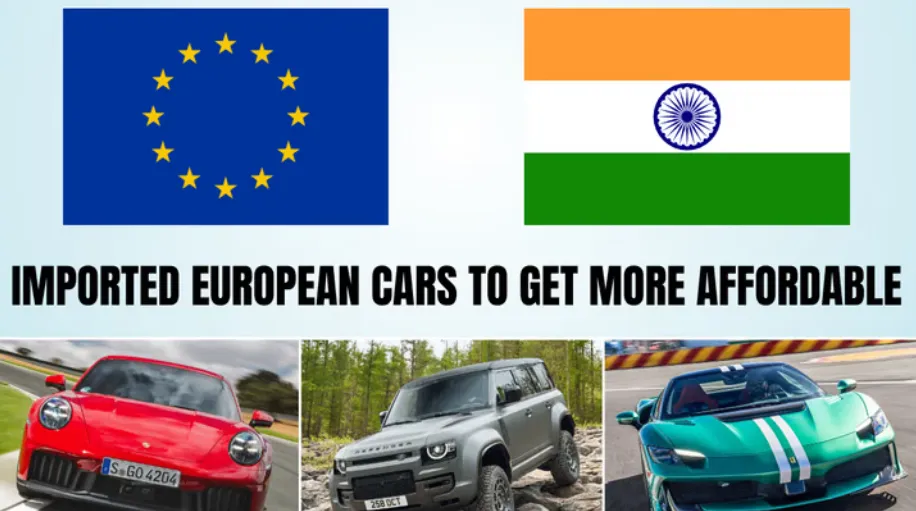
What if buying a European car in India suddenly became far more affordable than you ever imagined?
That is exactly the kind of transformation the proposed India–EU Free Trade Agreement (FTA) is expected to bring. With reports suggesting import duties on European cars could drop to as low as 10%, this trade deal has captured the attention of car buyers, auto manufacturers, policymakers, and everyday consumers across India.
This article breaks down the India-EU FTA in clear, simple language. Whether you are a car enthusiast, a middle-class buyer planning your next upgrade, or someone curious about how global trade affects daily life, this guide will help you understand what’s happening, why it matters, and what you should do next.
Understanding the India-EU FTA in Simple Terms
What Is the India-EU FTA?
The India-EU FTA is a proposed free trade agreement between India and the European Union. Its main goal is to reduce trade barriers like import duties, tariffs, and regulatory hurdles so that goods and services can move more freely between the two economies.
In short, it is about making trade cheaper, smoother, and more predictable for both sides.
Why Is This Agreement So Important Now?
Negotiations between India and the EU began in 2007, stalled in 2013, and were revived in 2022 due to shifting global trade dynamics. Rising geopolitical tensions, supply chain disruptions, and the need for reliable trade partners have made this agreement more urgent than ever.
According to the European Commission, the EU is already India’s third-largest trading partner, while India is among the EU’s fastest-growing major economies. A comprehensive FTA could significantly expand this relationship.
What Does “Import Duties Slashed to 10%” Really Mean?
Current Import Duty Structure on European Cars
As of today, India imposes very high import duties on completely built-up (CBU) cars:
- Cars priced below USD 40,000: ~60% import duty
- Cars priced above USD 40,000: ~100% import duty
On top of this, buyers also pay GST, cess, and registration charges, making imported European cars extremely expensive for most Indians.
Proposed Change Under the India-EU FTA
Under the proposed India-EU FTA, import duties on European cars could be reduced to around 10%, possibly in a phased manner.
Example to understand the impact:
- A European car with an ex-factory price of ₹30 lakh
- Today: Final price can cross ₹60–70 lakh
- With 10% duty: Final price could drop closer to ₹40–45 lakh
This is a massive price difference and could completely change buying decisions.
Why the European Union Wants Lower Duties on Cars
Europe’s Strength in the Automobile Sector
The EU is home to some of the world’s most respected automobile brands, especially from Germany, France, Italy, and Sweden. These brands are known for:
- Advanced safety technologies
- Superior engineering and performance
- Strong electric vehicle (EV) innovation
Lower duties would allow European manufacturers to compete more effectively in India’s fast-growing car market.
Export Growth and Market Access
India is projected to become the third-largest passenger vehicle market globally by 2030 (Source: IBEF – India Brand Equity Foundation). For European automakers, India represents long-term growth potential that cannot be ignored.
Why India Is Considering This Move
Benefits for Indian Consumers
The biggest immediate winners of the India-EU FTA are Indian consumers.
You get:
- Lower car prices
- More choices in premium and electric vehicles
- Access to the latest global models
For many buyers, a European car could shift from “unaffordable dream” to “realistic option.”
Boost to Competition and Quality
Increased competition often leads to:
- Better pricing
- Higher quality standards
- Faster adoption of new technologies
Indian manufacturers may respond by improving safety features, design, and technology to stay competitive.
Impact on the Indian Automobile Industry
Concerns of Domestic Manufacturers
Indian carmakers have expressed concerns that cheaper imports could hurt domestic production. Their key worries include:
- Loss of market share
- Pressure on profit margins
- Reduced incentive to manufacture locally
This is why India is likely to push for phased tariff reductions and local manufacturing commitments from EU brands.
Opportunity for Local Manufacturing Partnerships
Important Note:
Lower import duties do not necessarily mean fewer factories in India.
In fact, many European companies may:
- Set up or expand manufacturing units in India
- Increase local sourcing of components
- Create skilled jobs
This aligns with India’s “Make in India” vision.
What This Means for Electric Vehicles (EVs)
Faster EV Adoption in India
European brands are global leaders in EV technology. Reduced duties could:
- Make premium EVs more affordable
- Improve charging and battery technology standards
- Accelerate India’s EV transition
According to the International Energy Agency (IEA), EV sales in India grew by over 45% in 2023, but adoption is still limited by price and infrastructure.
Technology Transfer and Innovation
European automakers bring advanced know-how in:
- Battery management systems
- Vehicle safety software
- Sustainable manufacturing
Over time, this can benefit India’s entire automotive ecosystem.
Economic Impact Beyond Cars
Trade and GDP Growth
As per European Commission trade data, bilateral trade in goods between India and the EU crossed €120 billion in 2023. A full FTA could increase trade volumes by 30–40% over the next decade.
This growth can contribute to:
- Higher GDP growth
- Increased exports
- Stronger global trade positioning for India
Job Creation and Skill Development
More trade means:
- More logistics and supply chain jobs
- Higher demand for skilled engineers and technicians
- Growth in allied industries like auto components, software, and services
Possible Challenges and Risks
Revenue Loss for the Government
High import duties are a major source of revenue. Reducing them to 10% could initially lower government income.
Remember: Governments often balance this by:
- Expanding the tax base
- Increasing consumption
- Encouraging local production
Risk of Market Imbalance
If not managed carefully, cheaper imports could dominate the premium segment. That’s why negotiations focus heavily on safeguards, quotas, and timelines.
What Car Buyers Should Do Right Now
Should You Wait Before Buying a Car?
If you are planning to buy a premium European car, waiting could make sense. However:
- FTAs take time to finalise
- Benefits may be phased over several years
Tip: If your purchase is not urgent, keep tracking FTA developments over the next 12–24 months.
What About Budget and Mid-Range Buyers?
Even if you are not buying a European car, increased competition may push Indian and Asian brands to offer:
- Better features
- Improved safety
- More value for money
So, indirect benefits apply to everyone.
What Businesses and Dealers Should Prepare For
Auto Dealers and Importers
Dealers should:
- Re-evaluate pricing strategies
- Prepare for higher demand
- Train staff on European models and technologies
Component Manufacturers
Indian auto component companies may get new opportunities to supply to European brands operating locally.
You May Also Like to Read this Article - BYD Seal Recalled in India Over Possible Battery Issues
Global Context: Why FTAs Matter More Than Ever
Shift Away from Protectionism
Globally, countries are moving toward trusted trade partnerships instead of isolated markets. The India-EU FTA fits into this larger trend of economic cooperation.
Strategic Importance for India
By strengthening ties with the EU, India reduces overdependence on any single region and positions itself as a reliable global manufacturing and consumption hub.
FAQ’S
1. What is the India EU FTA, and why is it important for car buyers?
The India EU FTA is a proposed free trade agreement between India and the European Union aimed at reducing tariffs and trade barriers. For car buyers, it matters because it could significantly cut import duties on European cars, making premium and electric vehicles more affordable and increasing model choices in the Indian market.
2. Will the India EU FTA really reduce car import duties to 10%?
Under the India EU FTA framework, policymakers are discussing a steep reduction in import duties on European cars, with figures around 10% often mentioned in media reports. However, this rate, its scope, and the timeline will depend on the final negotiated text, including conditions like local manufacturing commitments and phased implementation.
3. How will the India EU FTA affect the price of European cars in India?
If the India EU FTA brings import duties down close to 10%, the landed cost of European cars could drop substantially. Today, many imported models face duties of 60–100%, doubling their base price. With lower tariffs, on-road prices may move much closer to global levels, making European luxury and EV models more accessible to Indian buyers.
4. When will the India EU FTA come into effect?
Negotiations for the India EU FTA have been revived, but no official implementation date has been announced yet. Trade deals of this scale usually go through multiple negotiation rounds, legal vetting, and ratification on both sides. Car buyers and businesses should treat timelines as tentative and follow official updates from the Indian government and the European Commission.
5. Will the India EU FTA make all European cars cheaper or only some segments?
The India EU FTA is expected to focus mainly on imported European cars, especially completely built units and possibly high-end or electric models. The exact coverage will depend on tariff schedules, exclusions, and thresholds in the final agreement. While premium segments should benefit first, competitive pressure could eventually influence pricing across mid-range and entry-level segments too.
Final Thoughts: What Should You Remember?
Key Takeaways
- The India EU FTA could dramatically reduce import duties on European cars
- Consumers may benefit from lower prices and more choices
- Indian industry faces challenges but also new opportunities
- EV adoption and technology transfer could accelerate
“Free trade agreements are not just about trade; they shape how economies grow, innovate, and connect with people’s lives.”