

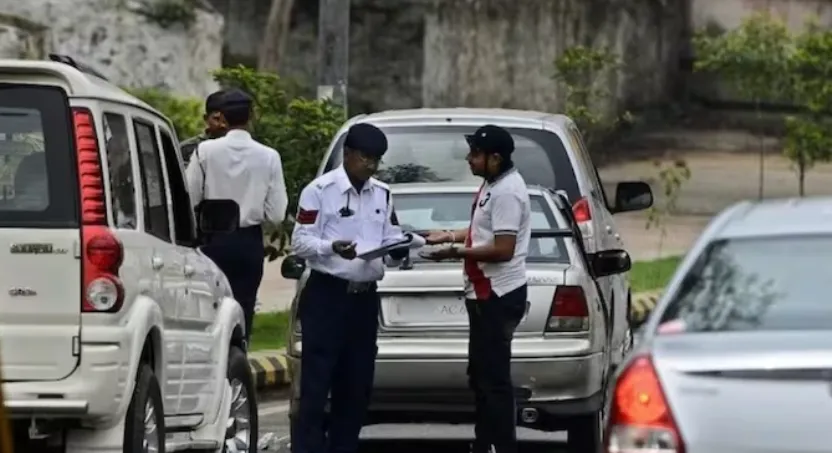
Imagine you break a traffic rule in Delhi but live in Mumbai, and still, your fine appears automatically on your phone, ready for you to pay in seconds. No confusion, no paperwork, no running around offices. That’s exactly what One Nation One Challan (ONOC) is all about: making traffic management smarter, simpler, and fair for everyone across India.
What Is a “Challan”?
Before we talk about ONOC, let’s understand what a challan means in everyday life.
A challan is a kind of official notice or ticket that you get when you break a traffic rule. It’s like when your teacher gives you a note for not doing homework, except this note comes from the traffic police and usually asks you to pay a fine.
Common Examples:
- Not wearing a helmet while riding a bike
- Jumping a red light
- Driving without a seatbelt
- Using a mobile phone while driving
- Parking in a no-parking zone
Earlier, the police used to issue paper challans, but now most of India has moved to e-challans, which are electronic challans generated automatically by CCTV cameras or handheld devices.
So, you can think of an e-challan as a digital traffic fine slip that’s stored online, safe, fast, and easy to track.
What Is the “One Nation One Challan” (ONOC) Initiative?
The One Nation One Challan initiative is a national-level project launched by the Government of India through the Ministry of Road Transport and Highways (MoRTH).
Its goal is to connect all the traffic enforcement agencies, transport departments, and courts across India through one single digital system.
In simple words, no matter where you drive in India, if you break a traffic rule, the system will automatically record it, issue a challan, and link it to your vehicle and driving license.
You can then see all your challans, from any city or state, in one place, and even pay them online.
Why Did India Need This System?
India is home to millions of vehicles and drivers. Every city and state had its own challan system earlier, some digital, some manual. This caused a lot of confusion and made it difficult for both drivers and authorities.
Here are the main reasons why ONOC was created:
A) Lack of Uniformity
Each state had its own e-challan portal and format. A fine paid in one city often did not appear in another’s database.
B) Lost Data & Poor Tracking
When a person moved to another city, old challans were often forgotten or never paid because the systems were not linked.
C) Manual Errors & Corruption
Paper-based challans could be lost, misplaced, or even misused. Digital systems reduce human errors and corruption.
D) Growing Number of Vehicles
As per government data, India had over 34 crore registered vehicles by 2024, and it increases every year.
Without a centralized digital system, managing so many violations becomes almost impossible.
E) Safety & Accountability
The main aim is to make Indian roads safer by ensuring people actually follow traffic rules and are held responsible if they don’t.
How Does ONOC Work? (Step-by-Step Explanation)
Let’s understand how this system actually works simply:
Step 1: Traffic Violation Happens
A person breaks a traffic rule, maybe drives too fast, skips a red light, or parks incorrectly.
Step 2: Violation Is Detected
CCTV cameras, speed guns, or traffic police capture the violation. Modern cities now use AI-powered cameras that automatically read number plates.
Step 3: Vehicle and Driver Information Is Retrieved
The system uses two national databases:
- VAHAN – a central database containing all vehicle registration details.
- SARATHI – a database containing driving license information.
So, the system can instantly find out who owns the vehicle and who is driving.
Step 4: E-Challan Is Generated
A digital challan (fine slip) is created automatically with:
- Time and place of violation
- Type of rule broken
- Amount of fine
- Vehicle and driver details
Step 5: Notification Is Sent
The challan is sent to your registered mobile number or email.
You also get a message that includes the challan number and payment link.
Step 6: View and Pay Online
You can visit the government’s official e-challan website or mobile app to view your challans from anywhere in India. You can pay online using UPI, net banking, debit or credit card.
Step 7: Record Is Updated
Once the payment is done, your record is cleared and marked as “paid”.
If you ignore or delay it, your driving license or vehicle registration may get blocked temporarily.
Benefits of One Nation One Challan
Let’s look at how this new system helps both you and the country.
A) Convenience for Citizens
You can view, manage, and pay all your challans from a single platform. No need to visit police stations or RTOs anymore.
B) Transparency
The system shows clear information, when, where, and why you were fined. No more surprise or duplicate challans.
C) Fairness
Automation reduces bias or mistakes. For example, if your car was wrongly fined, you can raise a dispute with proof easily online.
D) Better Traffic Discipline
When people know violations are being tracked digitally, they naturally become more careful while driving.
E) Faster Revenue Collection
Governments can collect fines faster and more accurately, which can be used for better road safety infrastructure.
F) National Integration
Whether you drive in Delhi, Mumbai, or Chennai, your challan details remain the same. No confusion between states.
ONOC and Digital India: How It Fits In
The One Nation One Challan system is a part of the broader Digital India mission. It shows how technology can make governance easy, transparent, and citizen-friendly.
It connects multiple government databases and systems:
- Traffic Police Networks
- Transport Departments
- Courts (for pending cases)
- Payment Gateways
- Vehicle and License Databases
This makes India’s road safety system stronger, smarter, and more future-ready.
Real Statistics That Show Its Impact
- India collects over ₹4,000 crore worth of traffic fines every year, yet thousands of challans remain unpaid.
- The Supreme Court of India reported that unpaid traffic challans across states add up to ₹28,844 crore.
- In Gujarat, all 38 police districts are already using the ONOC system.
- In Ahmedabad, about 5,000 to 6,000 e-challans are issued daily. After adding new technology, it is expected to reach 15,000–18,000 challans per day.
- The challan payment recovery rate improved from 9% to 25% after implementing ONOC.
- In Panchkula, automated systems increased Pollution Under Control (PUC) challans by over 13,000%, improving environmental compliance.
These figures show that ONOC is not just a plan; it’s already making roads safer and enforcement stronger.
Challenges of ONOC (Because Every New System Needs Time)
While ONOC has clear benefits, it also faces a few challenges that the government and citizens must solve together.
A) Digital Divide
Not everyone has access to smartphones, the internet, or digital literacy.
Some people may struggle to check or pay challans online.
B) Wrong or Duplicate Challans
Sometimes, cameras may misread number plates or record the wrong vehicle.
This can cause confusion and unfair fines.
C) Lack of Awareness
Many people don’t even know they can check or pay challans online.
Public awareness campaigns are needed to spread information.
D) Privacy and Data Security
Since all vehicle and driver data is centralized, strong cyber protection is necessary to prevent data leaks or misuse.
E) Fake Messages and Scams
Scammers have started sending fake WhatsApp messages pretending to be e-challan notifications.
Citizens must be careful and only use official government websites.
F) Coordination Between States
India has 28 states and 8 Union Territories, each with its own systems. Bringing them under one uniform platform requires time, training, and effort.
Note: Every digital transformation takes time. Just like UPI or Aadhaar took a few years to become widely accepted, ONOC, too, will gradually become a part of our everyday life.
How You Can Use the ONOC System
Here’s a simple step-by-step guide on how you can benefit from this initiative.
Step 1: Check Your Challans
Visit the official e-challan website (you can search “e-challan Parivahan” on Google).
Enter your vehicle number or driving license number to see if you have any pending challans.
Step 2: Verify the Details
Look at the date, time, and location of each challan.
If something looks wrong, you can click on “Raise Grievance” and upload evidence.
Step 3: Pay the Challan
Use net banking, debit card, or UPI.
You’ll get a payment receipt instantly.
Step 4: Save or Print the Receipt
Keep it as proof, especially if you travel often.
Step 5: Keep Documents Updated
Make sure your vehicle insurance, pollution certificate, and license are all valid.
The ONOC system automatically detects expired documents and may issue fines for them, too.
Tip: Create a small reminder on your phone to check challans once every 2–3 months. This helps you avoid late fees and ensures your driving record stays clean.
Key Databases Behind ONOC (VAHAN and SARATHI)
Two important systems make ONOC possible:
A) VAHAN
This is India’s National Vehicle Registry. It has details of all registered vehicles, their owners, models, registration numbers, insurance, and fitness certificate.
B) SARATHI
This is the National Driving License System. It stores information about all driver's licenses issued in India.
When ONOC combines both these databases, authorities can easily identify the owner and driver for every vehicle violation.
How ONOC Helps the Police and Government
A) Real-Time Data
Police can monitor violations as they happen, using live CCTV feeds.
B) Better Revenue Management
Since payments go directly to government accounts, money collection becomes faster and more transparent.
C) Court Integration
Cases that go to court are automatically linked to the ONOC system, reducing manual paperwork.
D) Improved Road Planning
With digital reports showing where violations happen most, governments can improve road design and traffic signals.
“Good technology doesn’t just make life easy, it makes people responsible. ONOC is that kind of technology for Indian roads.”
How ONOC Helps Ordinary Citizens Like You
- No Need to Visit Offices: Everything happens online, from viewing challans to paying fines.
- Track History: You can keep a record of all past payments and violations.
- Instant Notifications: Receive alerts on your phone as soon as a new challan is generated.
- Avoid Harassment: Digital systems reduce the chances of on-spot disputes with police officers.
- Encourages Safe Driving: When you know your actions are being monitored, you naturally follow rules better
Remember: The goal of ONOC is not to collect money, it’s to make people follow rules willingly. Each fine you avoid by driving responsibly is actually a reward to yourself.
The Future of One Nation One Challan
As India’s digital infrastructure improves, ONOC is expected to include even more features:
A) Integration with Vehicle Insurance
If you violate too many rules, your insurance premium may go up, encouraging safer driving.
B) Integration with Fastag and GPS
In future, vehicles may directly get challans through Fastag data if they overspeed on highways.
C) Virtual Traffic Courts
Instead of visiting the court physically, you may be able to attend hearings online for disputed challans.
D) AI-Based Road Analysis
Using the data collected from challans, authorities can predict where accidents are likely to happen and take preventive action.
The Larger Picture: A Step Toward Responsible Driving
India witnesses over 1.5 lakh road deaths every year, one of the highest in the world. According to the Ministry of Road Transport, over 60% of road accidents are caused by human errors like speeding or signal jumping.
If ONOC helps people become more cautious, even a 10% drop in such accidents can save 15,000 lives annually.
That’s not just a number, that’s real families, real people, and real safety.
Note: Road safety isn’t only the job of the police or government. It starts with you, the person behind the wheel.
Final Tips for Drivers and Vehicle Owners
Here’s how you can stay ahead and make the best use of ONOC:
- Always Carry Valid Documents: Keep your driving license, registration certificate, insurance, and PUC updated.
- Avoid Common Violations: Most challans come from simple mistakes, helmets, seatbelts, or red lights.
- Stay Alert for Fake Messages: Never click on unknown links claiming to be “e-challans”.
Always visit the government’s official site. - Educate Your Family: Teach your kids and elders about safe road habits and digital payments.
- Be a Role Model: Following traffic rules isn’t a burden; it’s an example for others.
Tip: Encourage your friends and family to check their challans and pay dues regularly. A small reminder can prevent a big problem later.
You May Also Like to Read this Article - Volkswagen Cars in India in 2025 – German Engineering with Indian Roads
How ONOC Will Change the Way India Drives
Think about it, when every traffic violation is tracked digitally, two big things happen:
- Fear of Being Caught Increases
You can’t escape a fine just because you moved to another city or because an officer didn’t stop you on the spot. - Respect for Rules Grows
People start valuing safety, not because they fear fines, but because they understand the purpose behind them.
Over time, this builds a culture of responsible driving, something India truly needs.
“Smart cities aren’t built by smart buildings, they’re built by smart citizens who follow rules.”
The Road Ahead: Collaboration and Awareness
For ONOC to work perfectly, all stakeholders must collaborate:
- The government must keep systems updated and transparent.
- Police must handle grievances fairly and quickly.
- Citizens must stay aware, honest, and responsible.
- Media and schools can spread awareness through road safety campaigns.
Together, we can make India’s roads safer and our traffic systems smarter.
Remember: Following traffic rules isn’t about avoiding fines.
It’s about respecting life, yours and others’.
FAQ’S
1. What is the One Nation One Challan initiative?
The One Nation One Challan (ONOC) initiative is a centralised system launched by the Government of India to integrate traffic violation management across all states. It connects traffic police, transport departments, and courts through one digital platform, allowing citizens to view and pay traffic fines online, no matter where the violation occurred in India.
2. What is the main purpose of One Nation One Challan?
The main goal of One Nation One Challan is to make traffic law enforcement uniform, transparent, and efficient across India. It helps link all traffic violation data, improve fine collection, and reduce manual errors. The initiative also promotes road safety by ensuring accountability for every driver, regardless of where they travel.
3. How does the One Nation One Challan system work?
When a traffic rule is broken, CCTV cameras or police devices capture the violation. The system retrieves the vehicle and driver details using national databases like VAHAN and SARATHI, automatically generates an e-challan, and sends it to the registered mobile number. The challan can then be viewed and paid online through the government portal.
4. Where can I check and pay my One Nation One Challan fines?
You can check and pay your One Nation One Challan fines on the official e-challan website managed by the Ministry of Road Transport and Highways. By entering your vehicle registration number or driving license number, you can see all pending challans, verify details, and complete payment securely using UPI, net banking, or cards.
5. What are the benefits of One Nation One Challan for citizens?
The ONOC system simplifies fine management by allowing you to view and pay all your traffic challans from one online platform. It increases transparency, reduces paperwork, and eliminates confusion between states. You can easily verify violation details, raise disputes, and avoid visiting multiple RTOs or police offices for payments.
Conclusion
The One Nation One Challan (ONOC) initiative is more than a digital upgrade; it’s a vision for a safer, more disciplined India. It connects technology, governance, and responsibility in one smart ecosystem.
By making traffic law enforcement uniform, transparent, and accessible, ONOC reduces confusion and corruption and increases accountability.
When you, as a citizen, understand and support it, by checking your challans, paying fines on time, and driving responsibly, you become part of India’s progress story.
So next time you’re on the road, remember: “Rules are not to restrict your freedom, they exist to protect it.”