

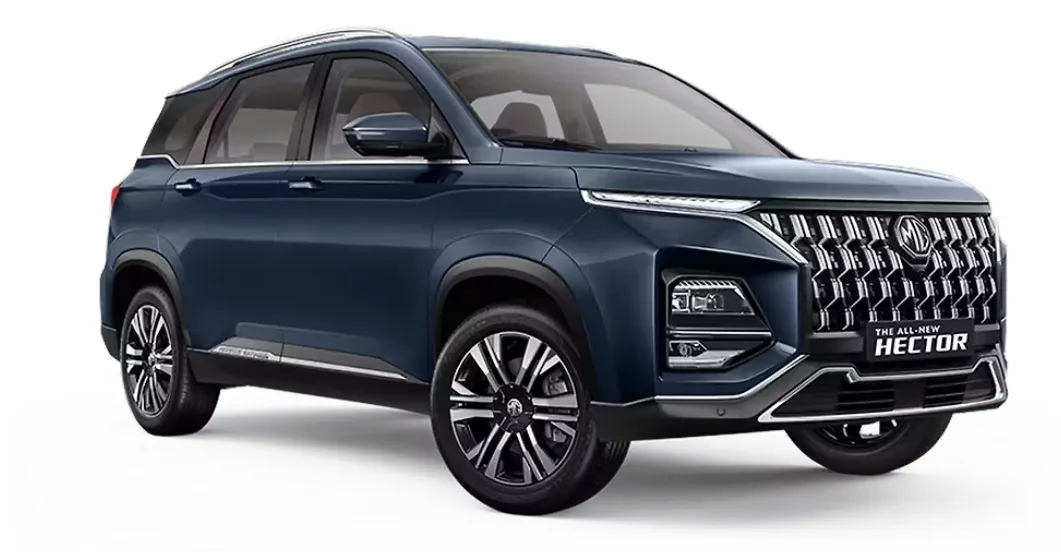
If you are planning to buy the MG Hector, safety is one of the first things you should understand clearly, because a feature-rich SUV is only truly valuable when it also protects you and your family on real roads.
The MG Hector safety rating has been discussed widely because buyers today want more than a big cabin and premium features. They want to know how strong the platform is, what the crash-test story looks like, and how useful the ADAS features are in daily driving. In this article, you will get a simple, detailed explanation of the Hector’s safety foundation, its key safety technologies, and what they mean for general buyers.
Why Safety Matters in an SUV
SUV buyers often assume bigger automatically means safer, but that is not always true. What matters more is the structure of the car, how the body absorbs impact, how many safety systems are included, and how well those systems support the driver before a crash happens.
According to Global NCAP-related reporting, the earlier MG Hector was recorded with a 3-star result in 2019, with moderate adult protection and basic child protection. Later articles also note that updated versions have improved features, but an official newer Global NCAP test result for the current Hector has not been released as of early 2025. That means buyers should look at both the crash history and the current equipment list before making a decision.
MG Hector Safety Rating in Simple Terms
The MG Hector safety rating is best understood as a combination of tested crash performance and real-world safety equipment. Older reports show a 3-star Global NCAP result, while some later reviews describe the Hector’s body structure and added equipment as stronger than before.
This is important because a car’s safety is not only about a number on paper. A strong platform, multiple airbags, stability control, ADAS, parking assistance, and child-seat support all work together to reduce risk. In other words, the Hector should be judged as a package, not just by one test result.
Note: If you are comparing variants, safety can differ by trim. Always check the exact variant you plan to buy, because ADAS and airbag counts may not be the same across all versions.
Platform Strength and Body Structure
One of the biggest reasons people discuss the Hector’s safety is its body structure. Reports describe the Hector as using high-strength steel in important areas, with a bodyshell designed to absorb crash energy and protect the cabin better during impact.
That matters because in a frontal crash, the front section should take the force first, while the passenger cell stays as intact as possible. A stronger structure helps reduce deformation, which is one reason reviewers often mention the Hector’s crashworthy design and structural stability.
Remember: A strong platform does not make a car invincible. It improves protection, but safe driving, seat belts, correct seating position, and child seat use still matter every day.
Airbags, Braking, and Core Safety Equipment
The MG Hector comes with the safety basics buyers expect in a modern SUV, and higher variants add more protection. Current specification listings show features such as ABS, EBD, brake assist, traction control, electronic stability control, hill-start assist, hill descent control, TPMS, ISOFIX child seat anchors, rear parking sensors, and camera-based parking support.
Some reports also mention dual front airbags as standard, with additional side and curtain airbags in higher variants. That is useful because airbags work best when combined with a stable bodyshell and proper seat-belt use.
“Airbags protect, but structure saves.” This is a simple way to think about car safety, because the body shell and restraint systems must work together, not separately.
ADAS Features on the MG Hector
The newest talking point in the Hector’s safety story is its ADAS package. MG Motor India says the Next-Gen Hector introduced Level 2 ADAS with 11 advanced driver assistance features, including Traffic Jam Assist.
Based on specifications and industry coverage, the ADAS-related features available on the Hector include Forward Collision Warning, Automatic Emergency Braking, Traffic Sign Recognition, Lane Keep Assist, Adaptive Cruise Control, Adaptive High Beam Assist, Lane Departure Warning, Blind-spot detection, and Traffic Jam Assist in select versions. These features do not replace the driver, but they help reduce the chance of mistakes in traffic, long drives, and stop-and-go conditions.
What these features do for you
- Forward Collision Warning alerts you if a crash risk is ahead.
- Automatic Emergency Braking can help slow or stop the car in certain emergency situations.
- Lane Keep Assist helps reduce unintentional lane drifting on highways.
- Adaptive Cruise Control supports more relaxed highway driving by maintaining a set distance.
- Traffic Jam Assist is especially useful in slow urban traffic, where fatigue and frequent braking are common.
How Safe Is It for Families?
For family buyers, the MG Hector’s value lies in its combination of cabin space, child-seat support, and active safety tech. The availability of ISOFIX mounts, parking cameras, TPMS, and stability features makes it easier for families to use the car with confidence.
Child protection, however, depends not just on the car but also on correct child-seat installation. Earlier Global NCAP coverage noted the Hector’s child protection score was weaker than adult protection in the 2019 test, which is a reminder that child safety should be treated seriously. If you travel with children regularly, using the right child seat is not optional.
Tip: Before delivery, ask the dealer to show you where the ISOFIX points are and how to install a child seat correctly.
You May Also Like to Read this Article - MG Majestor Price in India - Best 7 Seater SUV from MG
What Buyers Should Check Before Purchase
The safest way to evaluate the Hector is to look at the exact variant, not just the model name. Some variants get more airbags, ADAS features, and camera support than others, so the equipment list can change a lot across trims.
Here is a simple checklist:
- Confirm how many airbags the variant includes.
- Ask whether ADAS is available on your chosen trim.
- Verify ISOFIX child-seat anchors and parking camera features.
- Read the latest owner reviews on safety and real-road use.
- Compare the Hector with rivals on structure, features, and crash-test data, not price alone.
FAQ’S
1. What is the MG Hector safety rating?
The MG Hector has been widely reported with a 3-star Global NCAP safety result for its earlier tested version. That rating reflects adult and child occupant protection in crash tests, along with the safety equipment available at the time. Current variants may include more features, but buyers should always check the exact trim and the latest official safety data before deciding.
2. Is the MG Hector safe for family use?
The MG Hector can be a practical family SUV because it offers a spacious cabin, ISOFIX child-seat mounts, airbags, electronic stability control, and camera-based parking support. Its safety depends on the variant you choose and how you use it. For family buyers, the most important step is selecting a trim with the right safety features and using seat belts and child seats properly.
3. Does the MG Hector come with ADAS features?
Yes, newer MG Hector variants offer Level 2 ADAS features in select trims. These may include Forward Collision Warning, Automatic Emergency Braking, Lane Keep Assist, Adaptive Cruise Control, Traffic Jam Assist, and Blind Spot Detection. ADAS supports the driver, but it does not replace careful driving. It is best seen as an extra layer of safety, not a substitute for attention.
4. What safety features are available in the MG Hector?
The MG Hector includes important safety features such as ABS, EBD, electronic stability control, traction control, hill-start assist, hill descent control, TPMS, parking sensors, rear camera support, and ISOFIX child-seat anchors. Higher variants may offer more airbags and ADAS. These features improve daily safety, reduce driver stress, and help protect passengers in city and highway conditions.
5. How strong is the MG Hector’s platform?
The MG Hector is built on a platform designed to improve body rigidity and crash energy absorption. Reports describe a high-strength structure that helps protect the passenger cabin during impact. A strong platform is important because it works with airbags and seat belts to reduce injury risk. Still, real-world safety also depends on driving habits and the exact variant.
Final Take on MG Hector Safety Rating
The MG Hector safety rating shows a car that has improved a lot in safety equipment, especially with the addition of ADAS and strong core features like stability control, TPMS, cameras, and child-seat anchors. At the same time, older crash-test results still matter, because they show the importance of structural safety and remind buyers to check the latest official data before deciding.
If you want a simple takeaway, the Hector looks like a well-equipped SUV for safety-conscious buyers, especially in higher variants. But the best choice is still the variant that gives you the right balance of airbags, ADAS, and family-friendly safety features for your daily use.
Remember: Safety is not just a feature list. It is the combination of structure, technology, and the way you drive every day.