

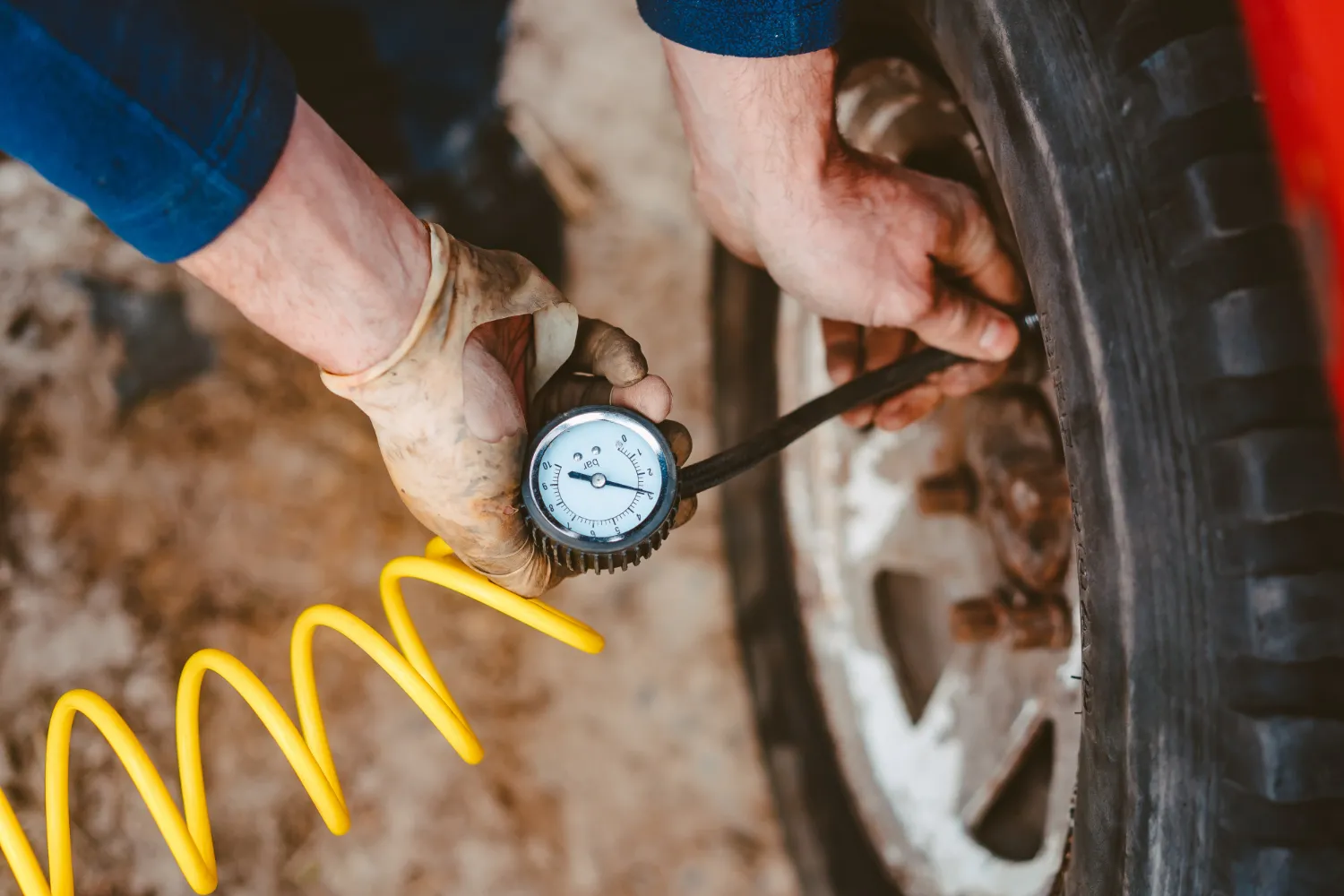
Your tyres decide your safety long before your hands touch the steering wheel. The right air pressure is the simplest, cheapest, yet most powerful way to keep your car safe, fuel-efficient, and smooth on the road—yet most drivers ignore it. This guide helps you understand car tyre air pressure, the correct PSI for your tyre size, how to measure and maintain it, common mistakes, and a full tyre-size-wise PSI list you can use anytime.
Driving your car daily means you trust four small patches of rubber to carry your entire world. But these tyres can perform well only when they have the correct air pressure. Low pressure can damage tyres and increase fuel costs, while high pressure can make your car unstable. This guide is written for every car owner who wants to understand their vehicle better and keep their family safe on the road.
1. Why Car Tyre Air Pressure Matters More Than You Think
Most people check fuel, engine oil, or battery health regularly, but tyre pressure is forgotten. According to a study by the U.S. Department of Energy, improper tyre inflation reduces fuel economy by 0.2% for every 1 PSI drop in pressure (Source: energy.gov).
A report by Michelin revealed that 1 out of every 3 cars drives with dangerously low tyre pressure, increasing accident risk by up to 15%.
Correct tyre pressure affects:
- Safety – Wrong pressure reduces braking performance and road grip.
- Fuel Efficiency – Under-inflated tyres can reduce mileage by up to 10%.
- Tyre Life – Low pressure causes uneven wear and reduces tyre life by 25%.
- Comfort – Over-inflation makes the ride bumpy, low pressure makes it unstable.
- Control – Steering and cornering depend heavily on proper tyre pressure.
This means the easiest way to improve safety and save money is simply to maintain the right PSI.
What is Tyre PSI and How Does It Work?
PSI stands for Pounds per Square Inch, the unit used to measure tyre air pressure. Car manufacturers decide the ideal PSI after testing the vehicle’s weight, suspension setup, braking system, and tyre type.
You will find the recommended PSI in:
- The driver-side door frame
- The fuel lid
- Owner’s manual
Most cars generally recommend 30–35 PSI, but you must always follow your car’s exact recommendation.
Factors That Affect Car Tyre Air Pressure
Many drivers think tyre pressure stays constant, but it changes daily based on multiple conditions. Below are the major factors:
1. Temperature
Tyre pressure increases in heat and decreases in cold. According to Bridgestone, tyre pressure drops by 1 PSI for every 10°F (5°C) decrease in temperature.
2. Driving Speed
High-speed driving builds heat, increasing PSI temporarily.
3. Road Conditions
Bad roads cause more tyre flexing, lowering the pressure over time.
4. Weight Load
More passengers and luggage increase tyre load, requiring slightly higher PSI for stability.
5. Tyre Age and Rubber Quality
Old tyres naturally lose air faster.
6. Puncture or Minor Air Leak
Even a tiny nail puncture can cause daily pressure loss.
Car Tyre Air Pressure List Based on Tyre Size
Here is the complete tyre size–wise air pressure chart. These ranges cover most hatchbacks, sedans, SUVs, and premium cars in India.
Tyre Size: 145/70 R13
Ideal PSI:
Front: 30–32
Rear: 30–32
Tyre Size: 155/70 R13
Ideal PSI:
Front: 30–33
Rear: 30–33
Tyre Size: 165/70 R14
Ideal PSI:
Front: 32
Rear: 32
Tyre Size: 175/65 R14
Ideal PSI:
Front: 32
Rear: 30–32
Tyre Size: 185/65 R15
Ideal PSI:
Front: 33
Rear: 33
Tyre Size: 195/55 R16
Ideal PSI:
Front: 33–36
Rear: 33–36
Tyre Size: 205/55 R16
Ideal PSI:
Front: 34–36
Rear: 34–36
Tyre Size: 215/60 R17
Ideal PSI:
Front: 33–36
Rear: 33–36
Tyre Size: 225/60 R17
Ideal PSI:
Front: 33–36
Rear: 33–36
Tyre Size: 235/60 R18
Ideal PSI:
Front: 34–38
Rear: 34–38
Tyre Size: 245/45 R18
Ideal PSI:
Front: 34–39
Rear: 34–39
Tyre Size: 255/50 R19
Ideal PSI:
Front: 36–40
Rear: 36–40
Tyre Size: 275/40 R20
Ideal PSI:
Front: 38–42
Rear: 38–42
Important Note:
These are standard ranges. Always follow the manufacturer-recommended PSI for your car model.
How to Read Tyre Size
A tyre marked “205/55 R16” means:
- 205 – Tyre width in millimeters
- 55 – Aspect ratio (height of sidewall)
- R – Radial construction
- 16 – Rim diameter in inches
When you understand tyre size, choosing your correct PSI becomes easier.
Car Tyre Air Pressure Chart for Popular Car Models in India
Below is a list of the recommended PSI for some popular cars (India-spec):
Maruti Swift
Front: 32
Rear: 32
Hyundai i20
Front: 33
Rear: 33
Tata Nexon
Front: 32
Rear: 32
Maruti Baleno
Front: 32
Rear: 32
Kia Seltos
Front: 33–35
Rear: 33–35
Hyundai Creta
Front: 33–35
Rear: 33–35
Toyota Innova Crysta
Front: 33–36
Rear: 36
Mahindra XUV700
Front: 35
Rear: 35
MG Hector
Front: 34–36
Rear: 34–36
How to Check Car Tyre Air Pressure Correctly
Checking tyre pressure is simple. Here is the right method:
- Always check pressure when tyres are cold (before driving).
- Use a digital tyre pressure gauge for accuracy.
- Remove the valve cap and place the gauge firmly.
- Compare reading with the recommended PSI.
- Inflate or deflate accordingly.
- Replace the valve cap tightly.
Tip: Check tyre pressure once every 10 days, especially before long trips.
Common Tyre Pressure Mistakes Car Owners Make
1. Checking pressure after driving
Tyres heat up and show a higher PSI than actual.
2. Ignoring the spare tyre
Your spare tyre must always have 2–3 PSI extra.
3. Over-inflating for mileage
This reduces grip and increases accident risk.
4. Under-inflating for comfort
This causes heat build-up and tyre burst chances.
5. Not adjusting PSI for load
Extra passengers need extra air pressure.
Effects of Low Car Tyre Air Pressure
Driving with low pressure causes:
- Higher fuel consumption
- Poor braking
- Heavy steering
- Faster tyre wear
- Higher chances of tyre burst
- Overheating of tyres
According to the National Highway Traffic Safety Administration (NHTSA), low tyre pressure contributes to 11,000 accidents every year in the U.S. (Source: NHTSA.gov).
Effects of High Car Tyre Air Pressure
- Loss of grip
- Hard braking
- Bumpy ride
- Uneven centre wear
- Increased risk on highways
High pressure reduces road contact, making your car unstable at high speeds.
How Weight Load Affects Tyre Air Pressure
If you carry:
- 4–5 passengers
- Boot full of luggage
- Highway speeds
Then you must add 2–3 PSI above the standard recommendation (if the manufacturer allows).
Seasonal Car Tyre Air Pressure Guide
Summer
Air expands, so keep PSI 1–2 lower if you live in extremely hot areas.
Winter
Air contracts, so check pressure every 7 days. Tyres lose 1 PSI per 10°F drop.
Rainy Season
Correct PSI is critical because wet roads reduce grip. Never drive with low pressure in rain.
Tubeless vs Tube-Type Tyre Pressure Difference
Tubeless Tyres
- Retain air longer
- Can run even with low pressure
- Ideal pressure: Manufacturer’s recommendation
Tube-Type Tyres
- Lose air faster
- More heat build-up
- Require more frequent checks
Car Tyre Air Pressure for Highway Driving
Highway speeds generate more heat.
Recommendations:
- Keep tyres at recommended PSI or 1–2 PSI extra
- Never overinflate
- Check pressure before starting the trip
- Avoid checking pressure mid-journey
Car Tyre Air Pressure for City Driving
City driving involves braking, bumps, potholes, and low speeds.
- Recommended PSI is usually the same as manufacturer suggestion
- Regular checks every 10–12 days
Signs That Your Car Has Wrong Tyre Pressure
Signs of Low Pressure
- Car pulling to one side
- Tyres looking flat at the bottom
- Vibrations at low speed
- Poor mileage
- Heavy steering
Signs of High Pressure
- Car feels bouncy
- Brakes skid
- Tyre centre wearing out
How Long Does Tyre Pressure Last?
Most tyres naturally lose 1–2 PSI per month. If you lose more, get them checked for minor leaks.
You May Also Like to Read this Article - 3 Cylinder Engine vs 4 Cylinder Engine | Differences & Benefits
Expert Tips to Maintain Correct Car Tyre Air Pressure
Tip 1: Check PSI when tyres are cold
This gives the most accurate reading.
Tip 2: Invest in a digital air gauge
Avoid relying only on fuel station machines.
Tip 3: Maintain equal pressure in front and rear (unless stated otherwise)
Many SUVs require different PSI.
Tip 4: Replace faulty valves every tyre change
Valve damage is a common reason for slow leaks.
Tip 5: Use nitrogen if you drive long distances
Nitrogen retains pressure longer, but it's optional.
FAQ’S
1. What is the recommended car tyre air pressure for most cars?
Most cars require 30–35 PSI of air pressure for safe and efficient driving. However, the exact recommended PSI varies based on vehicle weight, tyre size, and manufacturer guidelines. You can find the accurate pressure level inside the driver-side door frame, the fuel-lid sticker, or the owner’s manual. Always follow your car’s official recommendation rather than generic numbers.
2. How do I find the correct tyre air pressure for my tyre size?
You can find the correct tyre pressure by checking your car manufacturer’s label, usually located on the door frame or fuel lid. Tyre size alone doesn’t define PSI, but certain ranges exist (e.g., 185/65 R15 often requires around 32–33 PSI). Always prioritize the car manufacturer’s recommendation because it is tested for safety, load balance, and mileage.
3. What happens if car tyre air pressure is too low?
Low tyre pressure increases rolling resistance, reduces fuel efficiency, and makes steering heavier. It also causes uneven wear, overheating, and a higher risk of tyre burst during long drives. Even a drop of 5 PSI can significantly impact braking performance and mileage. Driving with low pressure also affects stability on highways and wet roads, making daily pressure checks essential.
4. What happens if car tyre air pressure is too high?
High tyre pressure reduces road contact, making your vehicle bouncy and unstable. Overinflated tyres wear out faster at the centre, provide poor grip, and increase braking distance, especially on wet roads. The ride becomes uncomfortable, and tyre burst chances rise at high speeds. Always keep PSI within the recommended range and avoid inflating tyres immediately after long drives.
5. How often should I check car tyre air pressure?
Check your tyre pressure once every 10–15 days, or weekly if you drive long distances. Tyres naturally lose 1–2 PSI per month, and weather changes can increase this loss. Cold mornings, long trips, or carrying heavy loads also affect pressure. Checking regularly ensures better safety, improved mileage, longer tyre life, and overall smoother performance.
Conclusion
The right car tyre air pressure is not just a number; it is the foundation of safe driving. It keeps your car stable, saves fuel, makes tyres last longer, and gives you complete control on the road. No matter how advanced your car is, its tyres require regular attention. By following the tyre-size air pressure list and maintenance tips in this guide, you can improve your driving experience and keep your family safe.