

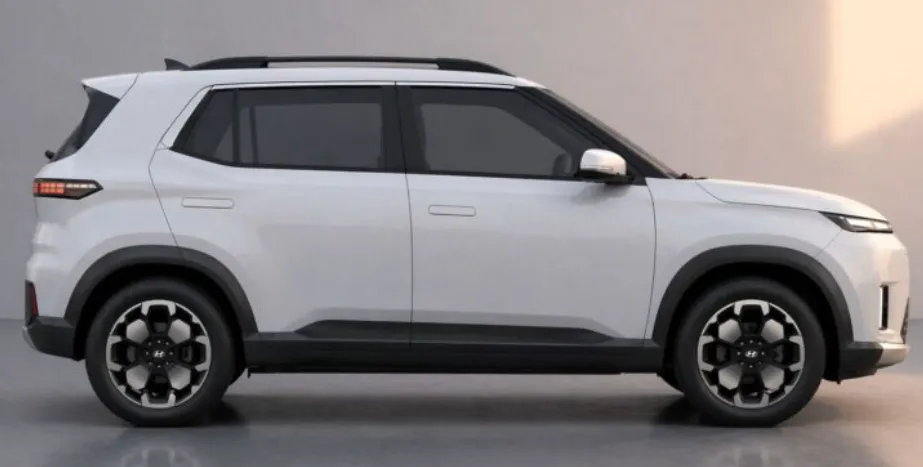
If you are waiting for a small, practical electric SUV that feels modern without jumping into a premium price bracket, the Upcoming Hyundai Compact EV is worth watching closely. Hyundai has confirmed a made-for-India compact EV for 2027, and early reports point to an affordable, city-friendly model with local engineering, two battery options, and advanced safety tech.
Electric cars are moving from “future tech” to everyday transport, and compact EVs are at the centre of that shift. In India, the appeal is simple: lower running costs, easier city driving, and fewer trips to the fuel station. Hyundai’s Upcoming Hyundai Compact EV aims to fit exactly into that space, targeting buyers who want an EV that is practical, feature-rich, and designed for Indian roads.
According to Hyundai India, the company already offers electric models like the Creta Electric and IONIQ 5, showing that it is expanding across price bands. The new compact EV is expected to become Hyundai’s more accessible electric option, which could make EV ownership feel realistic for first-time buyers and small families.
1. It Is Built For India
One of the biggest things to know about the Upcoming Hyundai Compact EV is that Hyundai has confirmed it will be “designed, engineered and built in India for Indian customers.” That matters because India-specific cars are usually tuned for local road conditions, traffic patterns, climate, and buying preferences.
Reports also suggest local production at Hyundai’s Sriperumbudur plant in Tamil Nadu, along with localised batteries from Exide. For you as a buyer, that can translate into better parts availability, stronger after-sales support, and possibly a more competitive price. A locally developed EV also has a better chance of being practical rather than overly global in its design.
Remember: India-specific engineering often means smarter packaging, more durable suspension tuning, and features chosen for real daily use.
2. It Will Likely Be Affordable
The Upcoming Hyundai Compact EV is expected to sit below the Creta Electric in Hyundai’s EV lineup, which makes it especially interesting for budget-conscious buyers. While official pricing has not been announced, market reports suggest a range of about ₹9 lakh to ₹12 lakh ex-showroom for the Inter-based compact EV.
That expected price positioning is important because compact EV buyers usually compare value very closely. If Hyundai can keep the entry price competitive while offering better features than many rivals, it could attract city commuters, young professionals, and families moving from petrol hatchbacks or compact SUVs. It may also challenge popular mass-market EVs in the subcompact category.
Tip: If you are planning to buy an EV in 2026–2027, keep a close watch on launch pricing, battery variants, and introductory offers. Early bookings often matter in the EV segment.
3. Two Battery Options May Be Offered
Hyundai India has indicated that the new compact EV will come with two battery options: Standard Range and Long Range. Based on the global Inster, these could be similar to 42 kWh and 49 kWh packs, with WLTP ranges of about 300 km and 355 km respectively.
For everyday drivers, this is useful because not everyone needs the biggest battery. If your use is mostly office commutes, school runs, and weekend errands, the Standard Range may be enough. If you travel more often or want extra flexibility, the Long Range variant could be the better pick. Hyundai’s choice to offer two options is a strong sign that it understands different buyer needs.
Note: Official Indian range figures can differ from global estimates, so treat current range numbers as indicative rather than final.
4. Safety And Tech Should Be A Major Highlight
The Upcoming Hyundai Compact EV is expected to carry advanced safety and convenience features that usually stand out in this category. Reports suggest Level 2 ADAS could be included, along with features like adaptive cruise control, lane-keeping assist, collision warning, and parking support.
That is important because compact EV buyers do not just want an electric motor; they want a modern driving experience. Hyundai is also expected to focus on a fully digital driver display and a large touchscreen infotainment system, likely around 10 inches or more. In practical terms, that means easier navigation, better visibility of drive data, and a cabin that feels more premium than its size suggests.
In India, safety and convenience are becoming major buying factors. According to Hyundai India, its electric lineup already includes strong equipment such as ADAS on the IONIQ 5, showing the brand’s interest in bringing advanced features into its EV range.
“A compact EV should feel easy in traffic, confident on highways, and useful every single day.”
5. It Could Become A Key City EV
The Upcoming Hyundai Compact EV is expected to compete in a segment that is growing fast because urban buyers want smaller, smarter electric cars. Reports suggest it may rival the Tata Punch EV and other entry-level electric SUVs aimed at city users. That makes sense because compact EVs solve one of the biggest real-world problems: daily mobility without high running costs.
Hyundai’s strategy appears to be built around a balance of practicality and aspiration. The compact EV is likely to offer enough range for daily use, enough features for modern buyers, and a size that feels manageable in traffic and tight parking spaces. For many readers, this is the type of EV that can replace a second family car or serve as a first step into electric mobility.
If you are comparing options, this segment will likely come down to price, charging convenience, safety features, and real-world range, not just brand name.
You May Also Like to Read this Article - All You Need to Know About the 2026 Hyundai Verna Facelift
What Buyers Should Watch Next
The biggest unknowns are still the official launch date, final pricing, Indian range figures, and exact feature list. However, the broad direction is already clear: Hyundai is preparing a compact, India-made EV that should be more accessible than its current electric models.
Before you make a buying decision, track these points closely:
- Final battery size and certified range.
- Charging speed and charger compatibility.
- Variant-wise feature list.
- Safety tech, especially ADAS availability.
- Service network and expected maintenance costs.
If Hyundai gets the pricing and range balance right, this compact EV could become one of the most important new electric launches for everyday Indian buyers.
FAQ’S
1. What is the Upcoming Hyundai Compact EV?
The Upcoming Hyundai Compact EV is Hyundai’s expected small electric SUV for India, designed to offer practical city driving, modern features, and an easier entry point into EV ownership. Reports suggest it will be positioned below the Creta Electric and built specifically for Indian buyers.
2. When will the Upcoming Hyundai Compact EV launch?
Hyundai has not announced an official launch date yet, but industry reports point to a 2027 debut for the made-in-India compact EV. Until Hyundai confirms timing, buyers should treat launch timelines as expected estimates rather than final dates.
3. What price can buyers expect?
The expected price is likely to fall in the affordable compact EV segment, with estimates around ₹9 lakh to ₹12 lakh ex-showroom based on current reports. Final pricing may change depending on battery size, variant, features, and launch strategy.
4. What range may the EV offer?
Reports suggest two battery options, with expected ranges of roughly 300 km and 355 km under WLTP testing. Real-world range in India may be lower depending on traffic, driving style, AC use, and road conditions, so official Indian figures will matter most at launch.
5. Will it have advanced safety features?
Yes, the Upcoming Hyundai Compact EV is expected to include modern safety tech such as Level 2 ADAS in higher variants. Features may include lane assistance, adaptive cruise control, and collision warning, though the final Indian spec list is still unconfirmed.
Conclusion
The Upcoming Hyundai Compact EV looks promising because it combines India-specific design, likely affordable pricing, dual battery options, and modern tech features. For general audiences, the takeaway is simple: this may be one of the most practical future EVs to watch if you want a compact, city-friendly electric SUV. A sensible next step is to follow official Hyundai updates and compare the model with other entry-level EVs once launch details are confirmed.